Modular Office Furniture in Dwarka: Smart Workstations and Modern Office Solutions
Choosing the right modular office furniture in Dwarka can help create a comfortable, organised and productive working environment. Whether you are setting up a startup office, renovating a corporate workspace or furnishing a commercial property, modular furniture offers flexible layouts, practical storage and a coordinated professional appearance.
From ergonomic workstations and executive desks to conference tables, reception counters and modular storage cabinets, the right furniture should suit your available space, business operations and employee needs.
Dwarka Interiors helps clients explore interior design solutions for residential and commercial spaces in Dwarka and selected areas of Delhi NCR.

What Is Modular Office Furniture?
Modular office furniture consists of furniture components designed to work together in different configurations. Depending on the system, desks, storage units, partitions and accessories can be arranged to suit different workspace requirements.
Common modular office furniture options include:
- Employee workstations and desk systems.
- Executive desks and manager tables.
- Conference and meeting room tables.
- Reception counters and waiting-area furniture.
- Modular storage cabinets and filing units.
- Office partitions and workstation screens.
- Computer desks and cable management systems.
- Office chairs and collaborative seating.
The main advantage of a modular approach is that furniture can be planned around the available floor area and, where the selected system permits, rearranged as workplace requirements change.
Benefits of Modular Office Furniture in Dwarka
1. Efficient Space Utilisation
Modular furniture can help businesses organise workstations, storage and meeting areas without unnecessarily obstructing circulation. Proper space planning is especially important in compact offices and shared workspaces.
2. Flexible Workspace Layouts
Some modular systems can be reconfigured when teams expand, departments move or office layouts change. Confirm the flexibility of the selected furniture system before purchasing.
3. Organised Storage
Cabinets, drawer units, overhead shelves and filing storage can help keep documents and office supplies organised. Storage should be positioned for convenient access without restricting movement.
4. Professional Appearance
Coordinated desks, chairs, partitions and storage create a consistent visual style. Furniture finishes can also complement the company’s branding and interior design.
5. Improved Workplace Comfort
Suitable desk dimensions, comfortable chairs and adequate legroom can improve everyday usability. Ergonomic considerations should guide furniture selection for employees who work at desks for extended periods.
6. Integrated Cable Management
Suitable desks and workstation systems can incorporate cable trays, grommets and other management features. These help organise power and data cables and make work areas easier to maintain.
Types of Modular Office Furniture
1. Modular Office Workstations
Workstations are designed for employees who need a dedicated working surface and access to equipment, documents and storage.
Popular workstation configurations include:
- Single-person workstations.
- Linear workstation arrangements.
- L-shaped desks.
- Shared workstations for teams.
- Workstations with privacy screens.
- Desk systems with integrated storage.
Choose a configuration based on team size, equipment requirements, privacy needs and the available floor area.
2. Executive Desks and Cabin Furniture
Executive desks are commonly used in manager cabins, director rooms and private offices. The design should provide sufficient workspace, practical storage and comfortable seating.
Coordinating the desk with visitor chairs, cabinets and the room’s lighting can create a consistent professional appearance.
3. Conference Room Tables
Conference tables should accommodate the expected number of participants while leaving sufficient space for chairs and movement. Depending on the room, rectangular, oval or modular configurations may be suitable.
Consider cable access, power connections, presentation equipment and the placement of screens when planning the table layout.
4. Reception Furniture
Reception counters and waiting-area furniture create the first impression for visitors. A functional reception layout should provide a suitable working area for reception staff while maintaining clear visitor circulation.
5. Office Storage Cabinets
Modular storage furniture can include filing cabinets, drawer units, shelving and lockable storage. Select the size and internal configuration according to the documents, supplies and equipment that need to be stored.
6. Office Chairs and Seating
Office chairs should suit the intended user and work pattern. Consider adjustability, seat dimensions, back support, mobility and compatibility with desk height.
Waiting areas and breakout spaces may benefit from visitor chairs, lounge seating or compact sofas, depending on the office layout.
How to Plan a Modular Office Layout
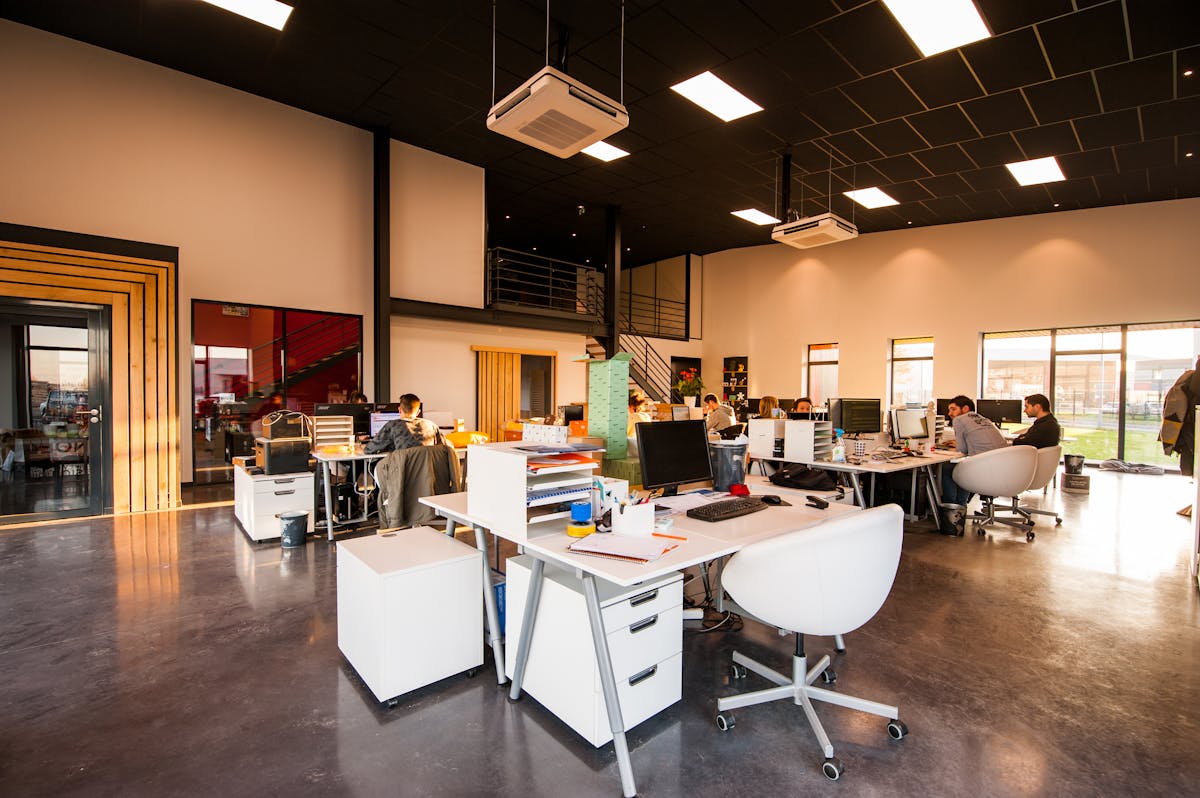
A well-planned office layout balances furniture placement, employee comfort, movement, lighting and access to essential services.
Step 1: Measure the Available Area
Record the office dimensions and identify doors, windows, columns, electrical points and other fixed features that affect furniture placement.
Step 2: Identify Workplace Requirements
Determine the number of employees, desk requirements, meeting areas, storage needs and equipment that must be accommodated.
Step 3: Select a Suitable Workstation Configuration
Compare individual desks, linear layouts, L-shaped workstations and shared desk systems. The right option depends on the nature of the work and the amount of space available.
Step 4: Plan Movement and Accessibility
Maintain practical routes between workstations, meeting rooms, entrances and shared facilities. Ensure the layout follows applicable accessibility and safety requirements.
Step 5: Coordinate Lighting and Electrical Points
Plan power outlets, data connections, task lighting and cable management before furniture installation.
Step 6: Finalise Materials and Finishes
Select materials based on durability, appearance, cleaning requirements and the expected intensity of daily use.
Modular Office Furniture for Small Offices
Small offices need furniture that provides practical work surfaces and storage while preserving enough room for comfortable movement.
- Choose desks that fit the actual room dimensions.
- Use vertical storage where appropriate.
- Consider shared workstations for compatible work activities.
- Use mobile drawer units where flexibility is useful.
- Keep frequently used equipment within convenient reach.
- Organise cables to reduce clutter around desks.
- Avoid oversized furniture that blocks circulation.
A measured layout is more effective than simply fitting as many desks as possible into the room. Employee comfort, safe movement and access to facilities should remain priorities.
Choosing Materials for Modular Office Furniture
The right furniture material depends on the intended use, budget, maintenance requirements and desired finish.
Engineered Wood and Laminated Boards
Engineered wood products with suitable surface finishes are commonly used for office desks, cabinets and storage units. Confirm the board specifications, edge treatment and suitability for the expected use.
Metal Components
Metal may be used in furniture frames, supports and selected storage systems. Check the finish, stability and construction quality.
Glass Elements
Glass may be incorporated into selected desks, partitions or reception furniture. The type of glass, support system and installation method should be appropriate for the application.
Fabric and Upholstered Seating
Upholstered chairs and sofas should be selected according to comfort, durability, cleaning requirements and the amount of daily use.
Modular Office Furniture Cost in Dwarka
The cost of modular office furniture in Dwarka depends on the number of furniture units, dimensions, material specifications, hardware, finish and installation requirements.
| Cost Factor | What Affects the Cost |
|---|---|
| Workstation quantity | Number of desks, shared units and accessories |
| Furniture dimensions | Desk size, storage capacity and overall configuration |
| Materials | Board specifications, metal components and finishes |
| Hardware | Drawer channels, hinges, locks and cable management |
| Office chairs | Quantity, adjustment features and construction |
| Customisation | Special dimensions, branding and non-standard configurations |
| Delivery and installation | Transport, assembly, site access and installation work |
Request an itemised quotation that specifies quantities, dimensions, materials, finishes, hardware, delivery and installation. Compare quotations using the same requirements to understand the actual differences in cost.
How to Choose Modular Office Furniture Suppliers in Dwarka
1. Review Furniture Quality
Examine the construction, stability, surface finish, edge treatment and hardware of the proposed furniture. Ask for samples or product specifications where appropriate.
2. Check Customisation Options
Confirm whether desk dimensions, storage configurations, colours, partitions and accessories can be adjusted to suit your office.
3. Ask for a Detailed Quotation
The quotation should identify each furniture item, its dimensions, materials, hardware, quantity, delivery charges and installation scope.
4. Discuss Delivery and Installation
Confirm the expected production and delivery schedule, installation arrangements and coordination with other office work.
5. Check Warranty and Support
Ask about the warranty terms for furniture components and hardware, along with the process for resolving defects after installation.
6. Consider Long-Term Requirements
Choose furniture that suits current requirements and allows practical changes if your team or working arrangements evolve.
Common Mistakes to Avoid When Buying Office Furniture
- Buying desks without measuring the available space.
- Ignoring chair comfort and desk ergonomics.
- Overlooking electrical outlets and cable management.
- Selecting materials without considering daily use.
- Adding too many workstations and restricting movement.
- Failing to check storage and locking requirements.
- Comparing quotations with different material specifications.
- Not confirming delivery, assembly and warranty terms.
Careful planning helps create a workspace that is functional, comfortable and easier to maintain.
Integrating Office Furniture with Interior Design
Office furniture works best when it is planned alongside the broader interior design. Workstations, partitions, lighting, flooring and wall finishes should support a consistent layout and visual style.
For example, reception furniture can be coordinated with the brand’s visual identity, while workstation layouts should be aligned with lighting and electrical provisions. Meeting rooms may require different furniture dimensions and equipment access from open work areas.
Explore interior fit-out contractors in Dwarka for information about coordinating interior execution and finishing work.
You can also explore false ceiling design in Dwarka when planning lighting and ceiling finishes for your office.
Why Choose Dwarka Interiors?
Dwarka Interiors helps clients plan residential and commercial interiors in Dwarka and selected areas of Delhi NCR. Interior planning can consider furniture placement, lighting, storage, circulation and the overall design of the workspace.
Explore related services and resources:
- Dwarka Interiors – Home
- Interior Fit-Out Contractors in Dwarka
- Home Interior Design
- Modular Kitchen Design
- Contact Dwarka Interiors
Discuss your office layout, furniture requirements, preferred finishes and budget before finalising the interior plan.
Frequently Asked Questions About Modular Office Furniture in Dwarka
1. What is modular office furniture?
Modular office furniture uses coordinated components such as desks, workstations, storage units and partitions that can be arranged to suit different workplace requirements.
2. Is modular office furniture suitable for small offices?
Yes. Compact desks, shared workstation layouts and practical storage can help make better use of limited floor space. The layout should still preserve comfortable movement and safe access.
3. What furniture is required for a new office?
Common requirements include workstations, office chairs, storage cabinets, reception furniture and meeting tables. The exact list depends on the number of employees and the way the office operates.
4. How much does modular office furniture cost in Dwarka?
Cost depends on furniture quantity, dimensions, materials, hardware, customisation, delivery and installation. Request a detailed quotation based on the actual office requirements.
5. Can modular workstations be customised?
Many systems offer options for dimensions, storage, finishes and workstation configurations. Confirm which adjustments are available for the particular furniture range.
6. What should I consider when choosing office chairs?
Consider adjustability, seat dimensions, back support, desk height, expected usage and the user’s comfort requirements.
7. How do I maintain modular office furniture?
Follow the manufacturer’s cleaning instructions, avoid unsuitable chemicals, keep surfaces dry where required and inspect hardware periodically. Address loose fittings promptly.
Plan Your Modular Office Furniture in Dwarka
The right modular office furniture can help create a well-organised, comfortable and professional workplace. From employee workstations and executive desks to conference tables and storage systems, furniture should be selected according to your layout, daily operations and long-term requirements.
Measure the available space, identify essential furniture, compare material specifications and confirm delivery and installation details before placing your order.
For interior design assistance, visit Dwarka Interiors to discuss your office project.